
You might see posts online that feel annoying, extreme, or designed to start arguments. These are often called “rage bait.” It shows up on social media feeds, comment sections, and viral videos where people react emotionally instead of calmly.
Understanding this term helps you see why certain posts get so much attention. It also explains why some content spreads faster than others, even when it feels negative or exaggerated.
In this guide, you’ll learn what “rage bait” means, how it works, and how to recognize it quickly in real online situations.
QUICK ANSWER
Rage bait meaning: Rage bait is online content made to deliberately make people angry so they react, comment, or share it. It is often used to increase attention or engagement.
TL;DR
- Rage bait is content meant to trigger anger online
- Common on social media platforms
- Used to increase comments and engagement
- Often exaggerated or divisive posts
- Similar to clickbait but focuses on emotion
WHAT DOES RAGE BAIT MEAN?
Rage bait refers to online posts, videos, or headlines designed to make people angry on purpose. The goal is not to inform but to trigger strong emotional reactions.
It often spreads quickly because angry users are more likely to comment or share it.
RAGE BAIT IN SIMPLE ENGLISH
In simple terms, rage bait is “content that tries to make you mad so you react.”
For example:
- A post saying something extreme about a popular topic
- A video that shows an unfair or exaggerated situation
People often respond before thinking, which helps the post spread.
IS RAGE BAIT SLANG OR FORMAL?
Rage bait is informal internet slang.
It is commonly used on:
- Social media
- Comment sections
- Online discussions
It is not used in formal writing like academic papers.
HOW RAGE BAIT WORKS ONLINE
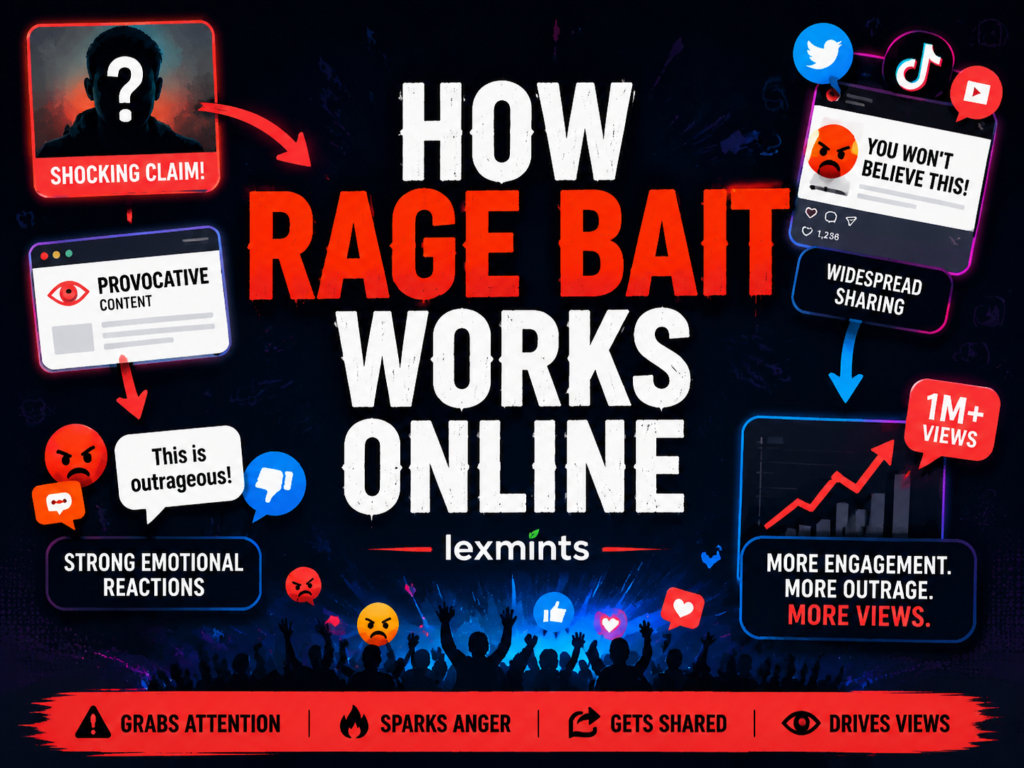
Rage bait works by triggering emotional reactions. When users react, platforms show the content to more people.
This cycle increases visibility.
Key steps:
- Post triggers anger
- People comment or share
- Algorithm boosts visibility
- More users see it
WHY PEOPLE USE RAGE BAIT
People or creators use rage bait for attention.
Common reasons:
- To get more views
- To increase comments
- To grow followers
- To earn ad revenue
RAGE BAIT VS CLICKBAIT VS TROLLING
| Term | Meaning | Main Goal |
| Rage bait | Content that triggers anger | Emotional reaction |
| Clickbait | Misleading headline | Get clicks |
| Trolling | Provoking reactions | Personal amusement |
Rage bait is more emotional than clickbait and more strategic than trolling.
COMMON PLATFORMS WHERE IT APPEARS
Rage bait is common on:
- TikTok
- YouTube comments
- X (Twitter)
- Facebook posts
It can appear in videos, memes, or even news-style posts.
EXAMPLES OF RAGE BAIT
- A post saying a popular movie is “the worst ever made”
- A video showing exaggerated bad behavior in public
- A headline designed to insult a group or idea
These examples are meant to provoke strong reactions quickly.
HOW TO SPOT RAGE BAIT QUICKLY
Watch for:
- Extremely emotional language
- Overly extreme opinions
- Posts designed to divide people
- Lack of real evidence or context
If it feels like it’s pushing you to react fast, it may be rage bait.
COMMON MISTAKES IN UNDERSTANDING IT
Some people think:
- It always means fake content
- It is just harmless humor
But not all rage bait is fake. It is mainly about intention: triggering anger for engagement.
FAQs
Is rage bait always fake?
Not always. It can be real or exaggerated, but the goal is emotional reaction.
Why do people fall for rage bait?
Because emotional content grabs attention quickly before thinking.
Is rage bait harmful?
It can increase negativity and online arguments.
Is rage bait the same as trolling?
No, trolling is for personal fun, rage bait is often for attention or profit.
Can rage bait be avoided?
Yes, by slowing down before reacting or sharing.
CONCLUSION
Rage bait is a modern internet term that explains why certain posts feel so emotional or provocative. It helps you understand how online attention works.
Once you recognize what does rage bait mean, it becomes easier to avoid reacting too quickly and stay more aware online.