You often see the word “mitigate” in news, school writing, or workplace discussions. It usually appears when someone is talking about reducing harm, risk, or negative effects.
Even though it sounds formal, the idea behind it is simple. It means making something less severe or less damaging.
In this article, you will learn what “mitigate” means in plain English. You will also see how to use it in real sentences, how it sounds when spoken, and when it fits naturally in writing.
QUICK ANSWER
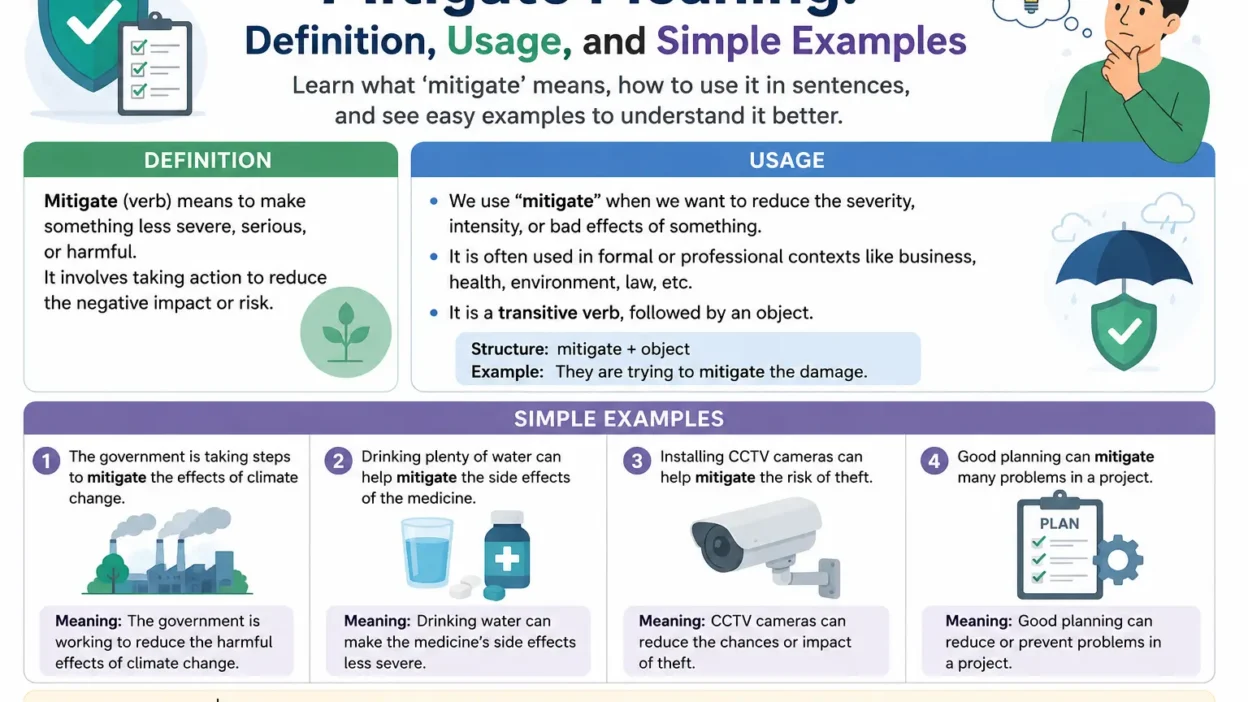
“Mitigate meaning” is to make something less severe, harmful, or intense. It is often used in formal writing and discussions about risk or damage.
TL;DR
• Mitigate means reduce or lessen harm
• Common in formal or professional English
• Often used with risk or damage
• Works mainly as a verb
• Not the same as completely remove
WHAT DOES MITIGATE MEAN?
“Mitigate” means to reduce the seriousness of something bad. It does not remove the problem completely.
It focuses on making a situation less harmful or easier to deal with.
For example:
• Wearing a seatbelt helps mitigate injury in an accident.
• Good planning can mitigate business risks.
SIMPLE DEFINITION IN ENGLISH

“Mitigate” is a verb that means to make something less harmful, less serious, or less severe.
Writers often use it in serious or formal situations, such as business risk, environmental damage, legal responsibility, and health safety.
In everyday speech, people usually say simpler words like “reduce,” “lessen,” “fix,” or “stop,” depending on the meaning.
PART OF SPEECH

“Mitigate” is mainly a verb.
Examples:
• The company mitigated the losses after the crisis.
• Governments try to mitigate pollution levels.
It does not commonly function as a noun or adjective in basic usage. The noun form is “mitigation.”
HOW TO PRONOUNCE MITIGATE
Pronunciation: MIT-ih-gayt
Break it like this:
• MIT = short and clear
• ih = soft middle sound
• gayt = rhymes with “gate”
Many learners stress the first syllable: MIT.
HOW TO USE MITIGATE
You usually use “mitigate” with negative situations.
Common patterns:
• mitigate + risk
• mitigate + damage
• mitigate + impact
• mitigate + problem
Examples:
• The policy helps mitigate financial risk.
• Trees can mitigate the effects of climate change.
• The medicine may mitigate symptoms.
WHEN TO USE IT
Use “mitigate” when:
• You want a formal tone
• You are talking about reducing harm
• You are writing reports or essays
It fits well in professional writing, not casual chat.
WHEN NOT TO USE IT
Avoid “mitigate” when:
• You mean completely solve a problem
• You are speaking informally
• A simpler word like “fix” is better
Example mistake:
❌ This app mitigates my phone.
✔ This app improves my phone performance.
COMMON CONTEXTS
| Context | Example Use | Why |
| Business | mitigate financial risk | formal decision-making |
| Health | mitigate symptoms | medical tone |
| Environment | mitigate pollution | global issues |
| Law | mitigate damages | legal responsibility |
SYNONYMS AND ANTONYMS
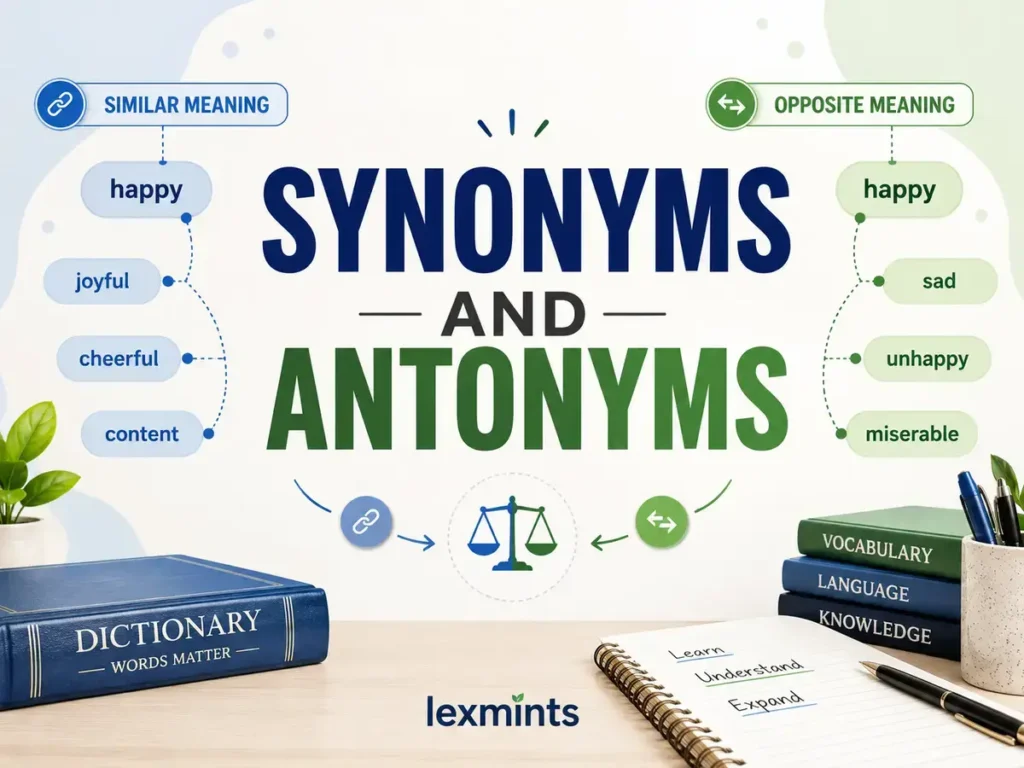
Synonyms:
• reduce
• lessen
• ease
• alleviate
• soften
Antonyms:
• worsen
• increase
• intensify
Note: “mitigate” is more formal than most synonyms.
COMMON MISTAKES

Many learners confuse “mitigate” with “eliminate.”
Wrong:
• This will mitigate the problem completely.
Correct:
• This will reduce the problem.
Mitigate only reduces impact, not full removal.
MINI QUIZ
- What does mitigate mean?
- Is it formal or informal?
- Does it mean remove or reduce?
- What part of speech is it?
Answers:
- Reduce harm or severity
- Formal
- Reduce
- Verb
Because “manifest” can carry different meanings depending on the situation, understanding context meaning can help you interpret the word more accurately in sentences and real-life usage.
FAQ
What does mitigate mean in simple English?
It means to make something less serious or harmful. It does not mean to remove it completely.
How do you use mitigate in a sentence?
You use it with risks, damage, or problems. Example: “They worked to mitigate the damage.”
Is mitigate formal?
Yes, it is mostly used in formal writing or professional speech.
What is a synonym of mitigate?
Common synonyms include reduce, lessen, and alleviate.
What is the opposite of mitigate?
Opposites include worsen or increase.
Can mitigate be used in everyday conversation?
It can be used, but simpler words are more common in casual speech.
Manipulative behavior can sometimes manifest in ways that make a person question their memory or perception. Understanding what gaslighting means can help explain this type of behavior more clearly.
CONCLUSION
“Mitigate meaning” is simple once you understand it. It means reducing harm or making something less severe.