You may see the word empathy in conversations about relationships, communication, education, psychology, and everyday life. It is a common English term that describes a person’s ability to understand another person’s feelings and experiences.
Learning this word can help you communicate more effectively and understand how people connect with each other. It is useful in both personal and professional situations.
This guide explains the empathy definition, pronunciation, usage, examples, related word forms, and the differences between empathy, sympathy, and compassion.
Quick Answer
Empathy means understanding and sharing another person’s feelings or experiences.
It involves seeing a situation from another person’s perspective and recognizing what they may be feeling.
TL;DR
• Empathy means understanding another person’s feelings.
• It is usually used as a noun.
• The verb form is empathize.
• It helps improve communication and relationships.
• Empathy differs from sympathy and compassion.
• It is common in everyday English.
What Does Empathy Mean?
Empathy is the ability to understand another person’s emotions, thoughts, or experiences.
When you show empathy, you try to understand how someone else feels instead of focusing only on your own viewpoint.
For example:
“After hearing her story, I felt empathy for what she had experienced.”
Empathy Definition in Plain English
In simple terms, empathy means putting yourself in another person’s situation and understanding their feelings.
It does not mean you have experienced the exact same event. Instead, it means you try to understand what that person is going through.
Example:
A friend loses a pet. You imagine how painful that loss feels and respond with understanding. That is empathy.
Pronunciation of Empathy
Empathy is commonly pronounced as:
EM-puh-thee
Phonetic spelling:
/ˈem.pə.θi/
Common mistake:
Some learners place too much stress on the final syllable.
Correct pronunciation:
EM-puh-thee
Part of Speech and Word Forms
The word empathy is primarily a noun.
| Word Form | Part of Speech | Example |
|---|---|---|
| empathy | Noun | She showed empathy toward her friend. |
| empathize | Verb | I can empathize with your situation. |
| empathetic | Adjective | He is an empathetic teacher. |
| empathic | Adjective | She gave an empathic response. |
Why Empathy Matters
Empathy helps people build stronger relationships.
It encourages understanding, reduces conflict, and improves communication.
Benefits of empathy include:
• Better listening skills
• Stronger friendships
• More effective teamwork
• Improved problem-solving
• Greater emotional awareness
Common Contexts Where People Use Empathy
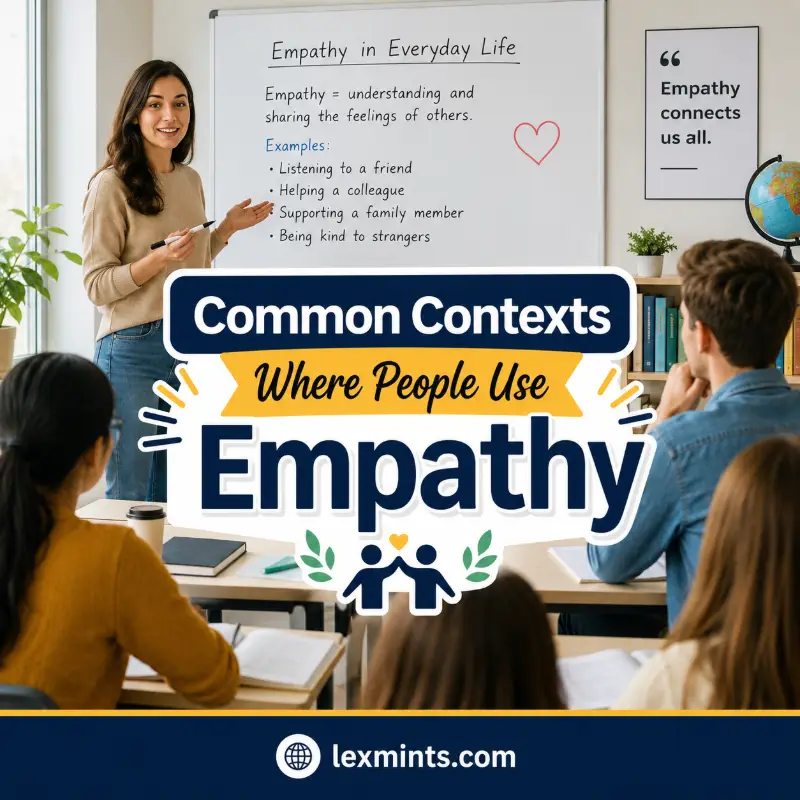
You may hear the word in many settings.
Family
Parents often use empathy when helping children through difficult emotions.
School
Teachers use empathy to understand students’ challenges.
Workplace
Managers may show empathy when employees face personal difficulties.
Friendships
Friends use empathy when supporting each other during hard times.
Examples of Empathy in Everyday Life
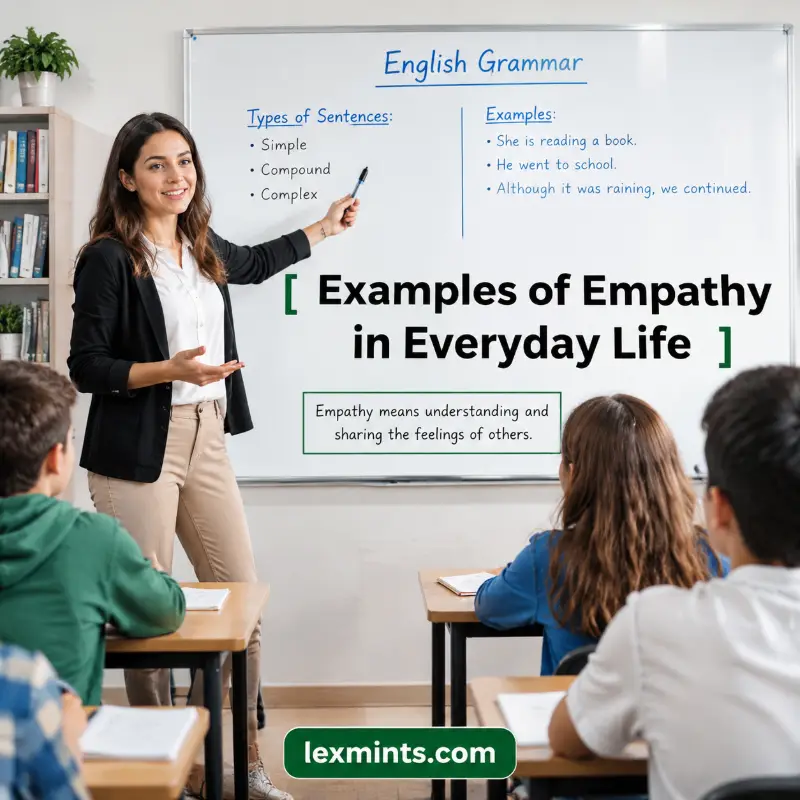
Here are some practical examples:
• Listening carefully when a friend feels upset.
• Understanding a coworker’s stress during a busy project.
• Supporting a family member after disappointing news.
• Recognizing why someone feels nervous before a presentation.
• Being patient with a person facing personal challenges.
Example sentences:
She showed empathy when her friend discussed a difficult problem.
Good leaders often demonstrate empathy toward their teams.
I could empathize with his frustration because I understood his situation.
Empathy vs Sympathy vs Compassion
These words are related but not identical.
| Context | Best Choice | Why |
|---|---|---|
| Understanding another person’s feelings | Empathy | Focuses on understanding emotions |
| Feeling sorry for someone | Sympathy | Focuses on concern |
| Wanting to help reduce suffering | Compassion | Includes action and care |
Empathy
Understanding how another person feels.
Sympathy
Feeling concern or sorrow for someone.
Compassion
Understanding suffering and wanting to help.
Example:
A friend loses a job.
• Sympathy: “I’m sorry that happened.”
• Empathy: “I can understand how stressful that feels.”
• Compassion: “How can I help you right now?”
Synonyms and Antonyms of Empathy
Synonyms
• Understanding
• Compassionate understanding
• Sensitivity
• Awareness
• Insight
No synonym matches every use perfectly.
Antonyms
• Indifference
• Unconcern
• Insensitivity
• Apathy
These words describe a lack of concern or understanding for others’ feelings.
Common Mistakes About Empathy
Mistake 1: Thinking empathy means agreement
You can empathize with someone without agreeing with them.
Correct: Understand their feelings even if you disagree.
Mistake 2: Confusing empathy with sympathy
Empathy focuses on understanding emotions.
Sympathy focuses on feeling concern.
Mistake 3: Assuming empathy requires the same experience
You do not need to experience the exact same event to show empathy.
Understanding another person’s perspective is often enough.
Mini Quiz
1. What does empathy mean?
A. Ignoring feelings
B. Understanding another person’s feelings
C. Winning an argument
Answer: B
2. Which word is the verb form?
A. Empathetic
B. Empathy
C. Empathize
Answer: C
3. Which term includes a desire to help?
A. Compassion
B. Empathy
C. Grammar
Answer: A
4. Is empathy usually a noun?
Answer: Yes.
FAQ
What is empathy in simple words?
Empathy is the ability to understand another person’s feelings and experiences. It involves seeing things from their perspective.
What is the best definition of empathy?
Empathy is understanding and sharing another person’s emotions or experiences in a meaningful way.
Is empathy a noun or a verb?
Empathy is a noun. The related verb is empathize.
What is an example of empathy?
Listening to a friend who is upset and trying to understand how they feel is an example of empathy.
What is the difference between empathy and sympathy?
Empathy focuses on understanding another person’s emotions. Sympathy focuses on feeling concern for them.
What is the difference between empathy and compassion?
Compassion includes empathy but adds a desire to help or reduce suffering.
Can empathy be learned?
Yes. Many people develop empathy through listening, experience, reflection, and practice.
Conclusion
The empathy definition centers on understanding another person’s feelings and experiences. It is an important skill in communication, relationships, and everyday life.
By learning how empathy works and how to use it correctly, you can connect with others more effectively and communicate with greater understanding.