
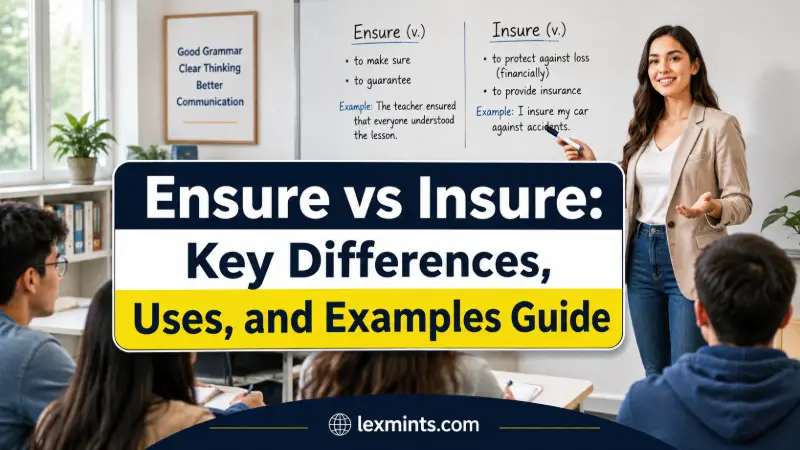
Ensure vs insure is a common word-choice confusion in American English because both words relate to making something secure or certain. Although they look and sound similar, they usually appear in different situations.
Use ensure when you mean to make sure something happens or to guarantee a result. Use insure when you mean to protect against financial loss by purchasing or providing insurance coverage.
The confusion happens because insure can sometimes carry the older meaning of making something certain, which overlaps with ensure. However, in modern US writing, most readers expect insure to relate to insurance policies, while ensure works best for general situations.
Understanding the difference helps you choose the right word in professional writing, school assignments, emails, contracts, and everyday conversations.
Quick Answer
Use ensure when you mean “make certain” or “make sure.”
Use insure when you mean “provide financial protection through insurance.”
Examples:
- The manager checked the report to ensure accuracy.
- The company will insure the vehicle against damage.
In most modern American English writing, ensure = guarantee an outcome and insure = protect with insurance.
Why People Confuse Them
People confuse ensure and insure because they share similar spelling, pronunciation, and historical connections. Both words relate to the idea of security or certainty.
The main difference comes from their modern usage.
Ensure focuses on actions that make a result happen:
- Ensure the doors are locked.
- Ensure customers receive proper service.
Insure focuses on financial protection:
- Insure your home against fire damage.
- The driver insured the vehicle.
Many writers remember the difference by connecting insure with insurance. When no policy or financial protection is involved, ensure is usually the better choice.
Key Differences At A Glance
| Context | Best Choice | Why |
|---|---|---|
| Making something certain | Ensure | It means to make sure something happens |
| Protecting property or health financially | Insure | It relates to insurance coverage |
| Workplace instructions | Ensure | It describes guaranteeing an action or result |
| Insurance policies | Insure | It describes protection against loss |
| General promises or procedures | Ensure | It focuses on certainty |
Quick Comparison
| Feature | Ensure | Insure |
|---|---|---|
| Main meaning | Make certain | Protect financially |
| Common use | Results, actions, situations | Policies, risks, coverage |
| Part of speech | Verb | Verb |
| Everyday example | Ensure the meeting starts on time | Insure the car before driving |
Meaning and Usage Difference
Ensure
Ensure means to make something certain or to take steps so that something happens.
Examples:
- Please ensure that all forms are completed.
- The teacher reviewed the instructions to ensure students understood the assignment.
The word focuses on responsibility, preparation, and preventing mistakes.
Insure
Insure means to provide or obtain insurance protection against possible damage, loss, illness, or financial risk.
Examples:
- Homeowners insure their houses against certain risks.
- The company insured its equipment.
The word usually involves an agreement with an insurance provider.
In some older or formal uses, insure can mean “make certain,” but this usage is less common in everyday American writing. Most readers expect the insurance meaning.
Tone, Context, and Formality
Both words work in formal and informal writing, but their contexts are different.
Ensure sounds natural in:
- business instructions
- school writing
- workplace communication
- procedures and guidelines
Example:
“The supervisor ensured that every employee received training.”
Insure belongs mainly to financial and legal contexts involving protection.
Example:
“The homeowner insured the property before moving in.”
Using insure when you mean “make sure” may confuse readers because many Americans connect the word with insurance.
Which One Should You Use?
Choose ensure when you want to say that someone makes an outcome happen or prevents a problem.
Use:
- ensure quality
- ensure safety
- ensure success
- ensure compliance
Choose insure when money, risk, or protection is involved.
Use:
- insure a car
- insure a home
- insure property
- insure against damage
A simple test:
If you can replace the word with “make sure,” use ensure.
If you can connect it with an insurance policy or financial protection, use insure.
When One Choice Sounds Wrong
Some sentences sound incorrect because the word does not match the situation.
Incorrect:
- The company insured that employees followed the rules.
Better:
- The company ensured that employees followed the rules.
Why? The company is making sure something happens, not buying protection.
Incorrect:
- She ensured her car against theft.
Better:
- She insured her car against theft.
Why? A car receives insurance coverage.
Common Mistakes (and Quick Fixes)
Mistake 1: Using insure for every type of protection
Incorrect:
- The checklist insured that no errors occurred.
Correct:
- The checklist ensured that no errors occurred.
A checklist cannot provide insurance. It helps guarantee an outcome.
Mistake 2: Using ensure for insurance coverage
Incorrect:
- They ensured their house against storms.
Correct:
- They insured their house against storms.
A house can receive insurance protection.
Mistake 3: Assuming the words are always interchangeable
Although the words overlap in some dictionary definitions, modern American usage usually separates them by context.
Use ensure for certainty and insure for insurance.
Everyday Examples
Ensure examples:
- Please ensure the door is locked before leaving.
- The chef checked temperatures to ensure food safety.
- The company created policies to ensure fair treatment.
Insure examples:
- I insured my car after buying it.
- The business insured its building.
- Travelers often insure valuable items before a trip.
These examples show that the correct choice depends on whether the sentence focuses on making something happen or protecting against loss.
Dictionary-Style Word Details
Verb
Ensure:
A verb meaning to make certain, guarantee, or make sure something happens.
Example:
- The team worked hard to ensure success.
Insure:
A verb meaning to protect against financial loss through insurance coverage.
Example:
- They insured the vehicle after purchasing it.
In some contexts, insure may also mean to make certain, but this meaning appears less often in modern US usage.
Noun
Ensure:
Not commonly used as a noun in standard US English.
Insure:
Not commonly used as a noun in standard US English.
Both words are mainly used as verbs.
Synonyms
Ensure closest plain alternatives:
- make sure
- guarantee
- secure
- confirm
Insure closest plain alternatives:
- cover
- protect
- provide insurance for
The alternatives depend on the meaning of the sentence.
Example Sentences
Ensure:
- The editor checked every detail to ensure accuracy.
- Parents should ensure children understand safety rules.
Insure:
- The owner decided to insure the vehicle.
- The policy insures the property against certain risks.
Word History
Ensure and insure developed from related word origins connected with the idea of making something secure or certain. Over time, English usage separated their common meanings. Today, ensure usually refers to guaranteeing an outcome, while insure commonly refers to insurance protection.
Phrases Containing
Common phrases with ensure:
- ensure safety
- ensure quality
- ensure success
- ensure compliance
Common phrases with insure:
- insure a vehicle
- insure property
- insure against loss
- fully insured
FAQs
Can ensure and insure be used interchangeably?
Ensure and insure are not usually interchangeable in modern American English. Ensure means to make something certain, while insure usually refers to financial protection through insurance. Some older uses allow overlap, but context normally determines the better choice.
Is insure only used for insurance?
Insure mainly appears in insurance-related situations, such as protecting a car, home, or business. However, some dictionaries recognize a broader meaning connected to making something certain. Writers should usually choose ensure for general certainty.
Should I write ensure or insure in professional documents?
Use ensure when discussing procedures, goals, quality, or results in professional documents. Use insure when discussing policies, coverage, or financial protection. Choosing the correct word makes the intended meaning clearer for readers.
Is ensure a more common word than insure?
Ensure often appears more broadly because people use it in everyday situations involving plans, actions, and responsibilities. Insure appears frequently in financial, legal, and business contexts involving protection against possible losses.
Can a person insure their health or property?
Yes, people can insure things such as health coverage, homes, vehicles, and valuable property. The word describes obtaining protection through an insurance arrangement rather than simply making something happen.
How can I remember ensure vs insure?
Remember that ensure connects with “make sure,” while insure connects with “insurance.” If the sentence involves guaranteeing an action or result, choose ensure. If it involves coverage against risk, choose insure.
Conclusion
The difference between ensure vs insure becomes simple when you focus on the purpose of the sentence.
Use ensure when you want to make something certain, prevent mistakes, or guarantee an outcome. Use insure when you want financial protection against possible loss through insurance.


