The term internet slang meaning refers to the informal language people use online in chats, texts, social media, and gaming platforms. For example, words like “LOL,” “BRB,” and “AFK” are all part of internet slang that help people communicate quickly and casually.
In today’s digital world, internet slang is everywhere. In addition, it changes very fast as new trends, memes, and online communities create new expressions. Because of this, many learners and non-native speakers often struggle to understand it.
Quick Answer
Internet slang meaning refers to informal words, abbreviations, and phrases people use online. Generally, these expressions appear in texting, social media, gaming, and online chats. However, most internet slang is not suitable for formal writing.
TL;DR
• Internet slang is casual online language.
• People use it in chats and social media.
• Common examples include LOL and BRB.
• Most slang terms are informal.
• Context is important when using slang.
• Some slang changes very quickly online.
What Does Internet Slang Mean?
Internet slang is a style of informal language used on the internet. Usually, people use it to communicate more quickly and naturally in online conversations.
In many situations, internet slang includes abbreviations, acronyms, emojis, and short expressions. For instance, “LOL” means “laughing out loud,” while “BRB” means “be right back.”
Over time, many slang terms become popular through memes, gaming culture, and social media trends. As a result, online language continues to evolve every year.
Internet Slang Definition in Plain English
Simply put, internet slang means casual online language that people use in digital communication. Most often, these words and phrases are shorter than standard English expressions.
Internet slang may include:
• Acronyms
• Shortened words
• Emojis
• Meme phrases
• Casual expressions
For example, someone might write:
“OMG that clip was hilarious lol”
Here, several slang forms appear in one sentence. Therefore, understanding context is very important.
Is Internet Slang Formal or Informal?
In general, internet slang is informal. Because of that, people mostly use it with friends, online communities, and casual groups.
However, internet slang is usually not appropriate in formal situations such as:
• Business emails
• School essays
• Job applications
• Professional reports
For example:
Incorrect:
“BRB lol, fixing the file now.”
Better:
“I will return shortly and update the file.”
Although some casual workplaces accept light slang, professional writing should remain clear and respectful.
Common Types of Internet Slang
Internet slang appears in different forms. Therefore, learning the main types can help you understand online conversations more easily.
Acronyms
Acronyms use the first letters of words.
Examples include:
• LOL = laughing out loud
• BTW = by the way
• IDK = I don’t know
Abbreviations
These shorten regular words.
For example:
• pic = picture
• tho = though
• msg = message
Emoji-Based Slang
Today, emojis can also carry slang meanings.
Examples:
• 💀 often means something is extremely funny
• 🔥 usually means excellent or impressive
Meme Expressions
Some slang terms come directly from meme culture.
Examples include:
• no cap
• it’s giving
• main character energy
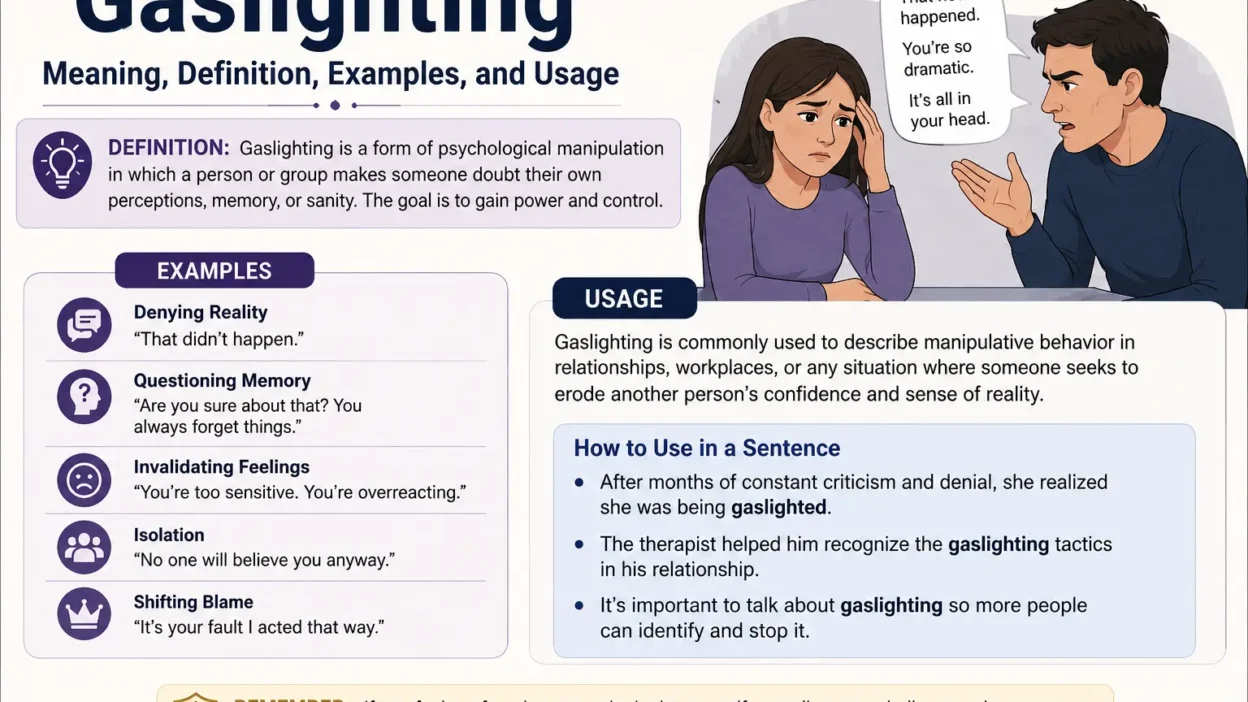
Gaslighting often makes people question their own thoughts, feelings, and interpretation of events, which is closely connected to how personal opinions and perspectives shape understanding. If you want to understand this concept better, read our guide on subjective meaning.
Popular Internet Slang Examples
Below are some common internet slang terms people use in the USA.
| Slang | Meaning | Example |
|---|---|---|
| LOL | Laughing out loud | “LOL that video was funny.” |
| BRB | Be right back | “BRB, I need coffee.” |
| AFK | Away from keyboard | “I’ll be AFK for ten minutes.” |
| IMO | In my opinion | “IMO that song is underrated.” |
| TBH | To be honest | “TBH I forgot the meeting.” |
| SMH | Shaking my head | “SMH, that was careless.” |
While some slang terms stay popular for years, others disappear quickly.
Where People Commonly Use Internet Slang
People use internet slang in many online spaces. Most commonly, it appears in:
• Text messages
• TikTok comments
• Instagram captions
• Gaming chats
• Discord servers
• Reddit discussions
• YouTube comments
In addition, some slang words now appear in everyday spoken conversations, especially among younger speakers.
How to Use Internet Slang Correctly
Using internet slang correctly depends on tone and context. Therefore, it is important to understand the meaning before using any slang term.
Here are a few helpful tips:
• Use slang in casual conversations
• Avoid slang in formal writing
• Learn the tone of each expression
• Do not overuse trendy phrases
For example, “LOL” sounds friendly and light. On the other hand, some slang terms may sound rude or sarcastic.
Incorrect:
“That homework is bussin.”
Better:
“That burger is bussin.”
As you can see, context changes the meaning completely.
When Not to Use Internet Slang
Although internet slang is common online, it does not fit every situation. In professional or academic settings, standard English is usually the safer choice.
Avoid internet slang in:
• Work presentations
• Academic essays
• Official emails
• Legal writing
• Professional communication
Furthermore, outdated slang can sound awkward or unnatural. If you are unsure, clear English is often the best option.
Understanding the context meaning can also help you recognize how gaslighting changes the meaning of conversations and situations to confuse or manipulate someone.
Pronunciation and Part of Speech
“Internet slang” is a noun phrase. Specifically, it describes a type of informal online language.
Simple pronunciation:
in-ter-net slang
Some slang terms are spoken differently depending on the situation.
For example:
• LOL may sound like “lawl”
• AFK is usually spoken letter by letter
• BRB is more common in writing than speech
Therefore, pronunciation often depends on the online community and context.
Synonyms, Related Terms, and Common Confusions
Several terms are closely related to internet slang.
Examples include:
• online slang
• texting slang
• chat slang
• cyber slang
• netspeak
Although these terms are similar, they are not always identical. For example, “texting slang” mainly refers to phone messages, while “internet slang” covers a wider range of online communication.
There is no exact opposite of internet slang. However, “formal language” is the closest contrast.
People who use manipulation tactics often ignore other people’s emotions instead of showing genuine empathy.
Common Mistakes With Internet Slang
Many English learners make similar mistakes with internet slang. Fortunately, these problems are easy to avoid once you understand the context.
Using Slang in Formal Writing
This is one of the most common mistakes.
Incorrect:
“Thx for the opportunity lol.”
Better:
“Thank you for the opportunity.”
Misunderstanding Tone
Sometimes, slang sounds playful. However, other expressions may sound rude or disrespectful.
Because of this, checking the meaning first is very important.
Overusing Slang
Too much slang can confuse readers. Instead, natural online communication usually mixes standard English with a few casual slang terms.
Internet Slang Comparison Table
| Context | Best Choice | Why |
|---|---|---|
| Texting friends | Internet slang | Sounds casual and friendly |
| Work email | Standard English | More professional |
| Gaming chat | Internet slang | Faster communication |
| School essay | Formal English | Clear and appropriate |
Mini Quiz
1. What does LOL mean?
Answer: Laughing out loud.
2. Is internet slang formal?
Answer: No, it is usually informal.
3. Where is internet slang commonly used?
Answer: Social media, texting, and online chats.
4. What does AFK mean?
Answer: Away from keyboard.
FAQ
What is internet slang?
Internet slang is informal language people use online. Typically, it includes abbreviations, acronyms, emojis, and casual expressions.
Why do people use internet slang?
People use internet slang because it is faster and more casual. Additionally, it helps online conversations feel more natural and friendly.
Is internet slang real English?
Yes, it is part of modern communication. However, it is usually informal rather than formal English.
What are common internet slang examples?
Common examples include LOL, BRB, AFK, IMO, TBH, and SMH.
Can internet slang be rude?
Sometimes, yes. Depending on the tone and context, certain slang terms may sound offensive or disrespectful.
Is internet slang used in real life?
Yes. In fact, many people now use online slang during everyday conversations.
Should students use internet slang in school writing?
Generally, no. Formal school assignments should use clear standard English instead.
Conclusion
Understanding internet slang meaning can make online conversations much easier to follow. At the same time, it helps you communicate more naturally in texts, chats, and social media.
As online language continues to change, learning common slang terms can improve both reading and communication skills.