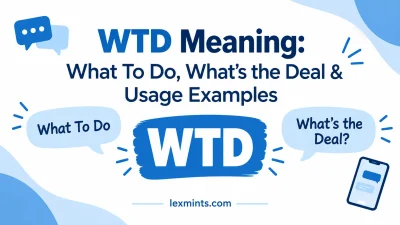

If someone sends you “WTW?” in a text, you may wonder what those three letters mean. The answer is usually simple: the sender is asking what is happening, what you are doing, or what the plans are.
WTW is common in casual texting, group chats, direct messages, and social media conversations. It can work as a quick greeting or as a way to start making plans.
The letters can also have other meanings. For example, WTW may express surprise in “What the what?” or refer to a specific topic such as clothing.
This guide explains the main WTW meaning, how people use it, how to reply, and how context changes the meaning.
Quick Answer
WTW Meaning usually refers to “What’s the Word?” in casual texting. It is similar to saying “What’s up?”, “What’s going on?”, or “What are the plans?”
If someone simply texts “WTW?”, a natural reply is often a short update, such as “Not much, you?”
TL;DR
• WTW usually means “What’s the Word?”
• It is informal texting and social media slang.
• It often means “What’s up?”
• WTW can ask about plans or availability.
• Context can give WTW another meaning.
• It is not suitable for formal messages.
WTW Meaning in Plain English
WTW is usually a casual way to ask what is happening. It does not normally ask for one particular word.
Instead, the sender may want to know what you are doing, what is new, or whether you have plans.
For example:
“WTW?”
This could mean:
“What’s up?”
or:
“What’s going on?”
A message such as “WTW tonight?” usually has a stronger focus on plans. The sender may want to know whether you are free or whether something is happening later.
The expression is relaxed and conversational. It normally appears between people who are comfortable using informal language.
What Does WTW Stand For?
WTW most commonly stands for “What’s the Word?”
The phrase “What’s the word?” is not usually meant literally in texting. It acts as a casual request for news, information, or plans.
You can think of the three letters this way:
| WTW | Meaning | Common purpose |
|---|---|---|
| W | What’s | Starts the question |
| T | The | Middle word |
| W | Word | Refers to news or what is happening |
WTW is best treated as an informal initialism or texting abbreviation. It is not a standard formal expression for business or academic writing.
The capitalization does not change the basic meaning. You may see WTW, wtw, or Wtw in casual messages.
How WTW Is Used in Texting
WTW often works as a conversation opener. Someone can send it when they want to reconnect without asking a detailed question.
For example:
Alex: WTW?
Jordan: Not much. Just finished work.
Here, Alex is simply asking what is going on.
WTW can also help start plans:
Alex: WTW tonight?
Jordan: I’m free after 7. Want to get dinner?
In this case, WTW is closer to “What are the plans?” or “What are you doing tonight?”
It can also ask for an update:
“WTW with that project?”
The meaning there is closer to “What’s happening with that project?”
Common uses include:
• checking in with a friend
• asking about weekend plans
• seeing whether someone is available
• starting a casual conversation
• asking what is happening in a group
• requesting an update
The surrounding words usually make the intended meaning clear.
WTW on Snapchat, Instagram, and TikTok
WTW does not have a completely different definition on each social platform. The same basic texting meaning usually carries over.
On Snapchat, someone may send “WTW?” to ask what you are doing or whether you have plans.
On Instagram, WTW can appear in a direct message, story reply, or casual comment. The sender may be checking in or asking about an activity.
On TikTok, context becomes especially important because comments can react to videos. A comment containing WTW may be asking what is happening, but another interpretation may fit if the video discusses clothing or entertainment.
For example:
“WTW after the game?”
This probably asks about plans after the game.
But:
“WTW for the wedding?”
could mean “What to wear for the wedding?” if the conversation is already about outfits.
The platform itself does not determine the meaning. The surrounding conversation does.
Other Meanings of WTW
Although “What’s the Word?” is the main texting meaning, WTW can represent other phrases.
“What the What?”
WTW can sometimes mean “What the what?” This expression shows surprise, confusion, or disbelief.
For example:
“She bought a house at 19.”
“WTW?!”
Here, WTW is not asking about plans. It is reacting to surprising information.
Punctuation can provide a useful clue. A WTW followed by “?!” may sound more like an emotional reaction than a casual greeting.
“What’s the Wave?”
Some people use WTW for “What’s the Wave?” in casual social conversations.
This can ask what is happening, where people are going, or what the current plan is.
For example:
“WTW after the concert?”
The intended idea may be “What’s the wave after the concert?” In practical terms, the person wants to know what everyone is doing next.
This interpretation is less universal than “What’s the Word?” Context should guide your reading.
“What to Wear?”
WTW can also mean “What to Wear?” when the conversation is about clothing or an event.
For example:
“WTW to the graduation party?”
If the conversation is already about clothes, the intended meaning may be “What should I wear?”
This is not normally the first interpretation of a standalone “WTW?” message.
“What to Watch?”
In a conversation about movies or shows, WTW may sometimes be understood as “What to Watch?”
For example:
“WTW on Netflix tonight?”
Here, the topic makes the intended meaning clear.
These alternate meanings show why context matters. Do not assume every WTW message has the same expansion.
How to Reply to WTW
There is no single correct reply to WTW. Your answer should match what the sender seems to be asking.
If WTW means “What’s up?”, you can keep your response short:
“Not much, you?”
“Just relaxing at home.”
“Working right now. What’s up?”
If the message seems to ask about plans, give a direct answer:
“Nothing planned yet.”
“I’m free tonight.”
“I’m going out with some friends.”
If you want to make plans, you can answer with an idea:
“I’m free after 8. Want to grab food?”
If you are unsure what the sender means, asking for clarification is completely natural:
“What do you mean?”
“What’s up?”
The best reply depends on the conversation rather than the three letters alone.
Is WTW Flirty?
WTW is not automatically flirty.
A friend can send “WTW?” simply to check in. A person you are dating can use the same message to see whether you are available.
For example:
“WTW tonight?”
From a friend, this may mean:
“What are you doing tonight?”
From someone interested in you, it could lead to:
“Want to meet up?”
The abbreviation itself does not prove romantic interest. Timing, previous conversations, emojis, and the relationship between the people provide more useful clues.
A late-night message may feel more personal, but even that does not guarantee flirting.
The safest approach is to read the entire conversation instead of assigning a special meaning to WTW.
WTW vs. Similar Texting Terms
WTW can look similar to other short expressions, but the questions are not identical.
| Term | Meaning | Typical use |
|---|---|---|
| WTW | What’s the Word? | Asking what is happening or what the plans are |
| WYD | What You Doing? | Asking what someone is doing |
| WSP | What’s Up? | Casual check-in or greeting |
| WYA | Where You At? | Asking someone’s location |
WTW is broad. It can ask about news, plans, activities, or the general situation.
WYD is narrower because it usually asks about someone’s current activity.
For example:
“WYD?” = “What are you doing?”
“WTW?” = “What’s happening?” or “What’s up?”
That small difference can help you understand the sender’s intent.
When to Use WTW and When Not to Use It
WTW works best in casual communication. It fits texts, group chats, casual direct messages, and conversations with friends.
It can also work with classmates or acquaintances when the relationship is informal.
Good situations include:
• texting a friend
• asking about weekend plans
• starting a casual conversation
• checking whether someone is free
• chatting in a group message
Avoid WTW in formal situations where clear language is expected.
For example, do not use:
“WTW about the meeting?”
in a formal email to a manager.
A clearer version would be:
“Do you have an update about the meeting?”
The same principle applies to applications, formal school work, business messages, and professional correspondence.
Common Mistakes and Examples
One common mistake is assuming WTW always means “What’s the Word?” even when the topic suggests something else.
Consider:
“WTW for the party?”
If the conversation is about outfits, “What to Wear?” may make more sense.
Another mistake is assuming WTW is automatically romantic.
“WTW tonight?”
This may simply be a friend asking about your plans.
A third mistake is giving an overly formal response to casual slang.
If someone texts:
“WTW?”
you probably do not need:
“I am currently engaged in several activities and will provide an update shortly.”
A natural response would be:
“Not much. You?”
The tone should generally match the message you received.
Seven Clear Examples
1. Casual check-in
“WTW?”
Meaning: “What’s up?” or “What’s going on?”
2. Evening plans
“WTW tonight?”
Meaning: “What are the plans tonight?”
3. Weekend plans
“WTW this weekend?”
Meaning: “What are you doing this weekend?”
4. Group planning
“WTW after the game?”
Meaning: “What is everyone doing afterward?”
5. Asking for an update
“WTW with the concert tickets?”
Meaning: “What’s happening with the tickets?”
6. Surprise
“WTW?! You actually met him?”
Meaning: “What the what?” or “Seriously?”
7. Clothing context
“WTW for the wedding?”
Meaning: “What should I wear for the wedding?”
The final example shows why context matters. The same three letters can point to different phrases.
FAQs
What does WTW mean in text?
WTW usually means “What’s the Word?” It is a casual way to ask what is happening, what someone is doing, or what the plans are.
What does WTW mean on Snapchat?
On Snapchat, WTW usually means “What’s the Word?” It often works as a casual greeting or a question about plans.
How do you respond to WTW?
You can reply with a short update, such as “Not much, you?” If the sender seems to be asking about plans, tell them what you are doing or suggest an activity.
Is WTW slang?
Yes. WTW is informal texting slang or an initialism used in casual digital communication. It is not normally appropriate for formal writing.
Can WTW mean “What the What?”
Yes. WTW can sometimes mean “What the what?”, especially as a reaction to something surprising or confusing. The surrounding message usually reveals whether this meaning fits.
Is WTW flirty?
Not by itself. WTW can be friendly, social, or potentially flirty depending on the relationship and conversation.
What is the difference between WTW and WYD?
WTW is broader and usually asks what is happening or what the plans are. WYD directly asks what someone is doing, usually at that moment.
Mini Quiz
1. Someone texts “WTW tonight?” What are they most likely asking?
A. What word should you use?
B. What are the plans tonight?
C. What did you wear?
2. Someone replies “WTW?!” after hearing surprising news. Which meaning may fit?
A. What the what?
B. What’s the word?
C. What to wear?
3. Is WTW automatically romantic?
A. Yes
B. No
4. Which setting is least suitable for WTW?
A. Group chat
B. Texting a friend
C. Formal business email
Answer Key:
- B
- A
- B
- C
Conclusion
WTW Meaning usually comes down to “What’s the Word?”, a casual way to ask what is happening or what the plans are.
The safest way to understand WTW is to look at the surrounding conversation. Once you know the context, replying naturally is usually easy.