
You may see “PMO” in text messages, social media comments, or Snapchat chats. It often appears in casual conversations where people use short abbreviations instead of full sentences. This can make it confusing if you are not familiar with modern slang.
The meaning of PMO depends on context, and it does not have only one definition. Some people use it to show frustration, while others use it as a friendly phrase. Because of this, understanding the situation is important before interpreting it.
In this guide, you will learn what PMO means in text, how it is used, and real examples. You will also see how tone changes its meaning in different conversations.
QUICK ANSWER
PMO meaning in text usually refers to slang expressions like “pisses me off” or “put me on,” depending on context. It is an informal internet abbreviation used in chats and social media.
TL;DR
• PMO is an internet slang abbreviation used in texting
• It can mean “pisses me off” in angry contexts
• It can also mean “put me on” in social contexts
• Meaning depends heavily on conversation tone
• Common in Snapchat, TikTok, and messaging apps
What PMO Means in Text
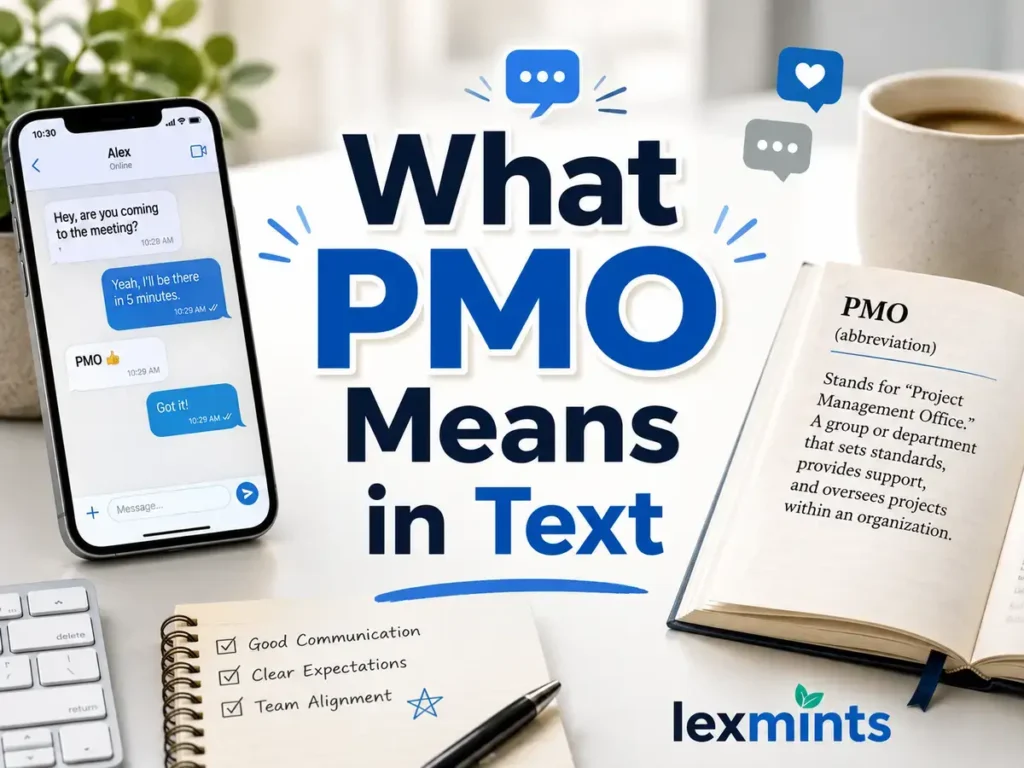
PMO meaning in text an abbreviation used in casual online communication. It is not a formal English word.
Most commonly, it stands for:
• “Pisses Me Off” — used when someone is annoyed
• “Put Me On” — used when asking for recommendations or introductions
The correct meaning depends on how it is used in the sentence.
PMO as “Pisses Me Off”
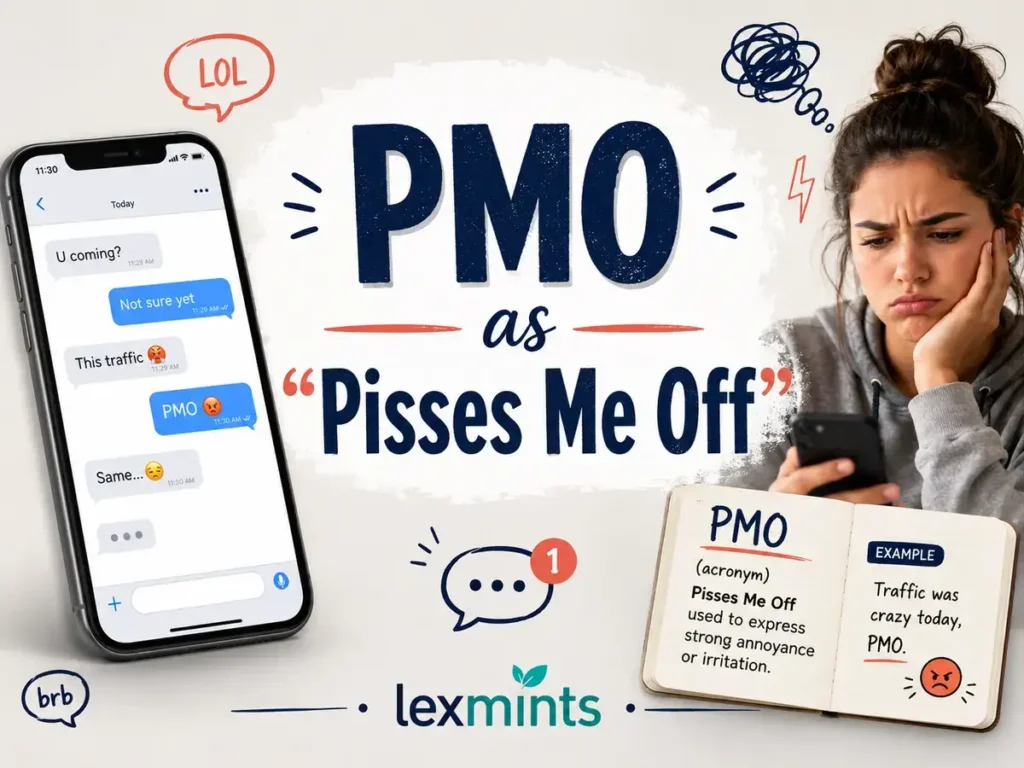
This is the most widely recognized meaning in angry or frustrated messages.
Example:
• “That delay really pmo.”
It shows irritation or annoyance in a short way.
Common mistake:
People sometimes think it is always neutral, but it can sound negative.
PMO as “Put Me On”
In friendly or social conversations, PMO can mean “introduce me” or “recommend me.”
Example:
• “That song is fire, pmo.”
Here it means “share it with me” or “recommend it to me.”
This meaning is common on TikTok and Instagra
Context Is Everything
PMO changes meaning based on tone.
| Context | Meaning | Example |
| Angry message | Pisses me off | “This traffic pmo.” |
| Friendly chat | Put me on | “That playlist pmo.” |
Always check emotion and topic before interpreting it.
Part of Speech
PMO is not a standard grammar word.
It works as:
• Acronym
• Informal slang phrase
It does not change form like normal verbs or nouns.
Where You See PMO
PMO is mostly used in:
• Text messages
• Snapchat chats
• TikTok comments
• Instagram captions
• Gaming chats
It is rare in formal writing or professional communication.
Common Mistakes
Many learners misunderstand PMO because:
• They assume it has only one meaning
• They interpret it literally instead of by context
• They ignore tone of conversation
Correct approach:
Always read surrounding words before deciding meaning
Related Slang Terms
• SMH — shaking my head
• FR — for real
• LMK — let me know
• WYA — where you at
These are similar texting shortcuts.
Origin
PMO became popular through online texting culture and social media slang.
Its exact origin is unclear, but it spread widely through messaging apps and youth communication trends.
Mini Quiz
- What does PMO often mean in anger?
- Can PMO mean a positive request?
- Where is PMO commonly used?
- Is PMO formal English?
Answers:
- Pisses me off
- Yes, “put me on”
- Social media and texting
- No
FAQs
What does PMO mean in text messages?
PMO usually means either “pisses me off” or “put me on.” The meaning depends on the situation and tone of the message.
Is PMO rude?
It can be rude if used to express anger. In friendly use, it is not offensive.
What does PMO mean on Snapchat?
On Snapchat, it often means “put me on,” asking for recommendations or introductions.
Does PMO always mean angry?
No, it can also be positive or neutral depending on context.
What does PMO stand for in slang?
It stands for “pisses me off” or “put me on,” both informal slang meanings.
How do I know which meaning is correct?
Look at the tone of the message. Angry tone means frustration; friendly tone means request.
CONCLUSION
PMO meaning in text is flexible and depends on context. It can express frustration or a request in casual conversations.


