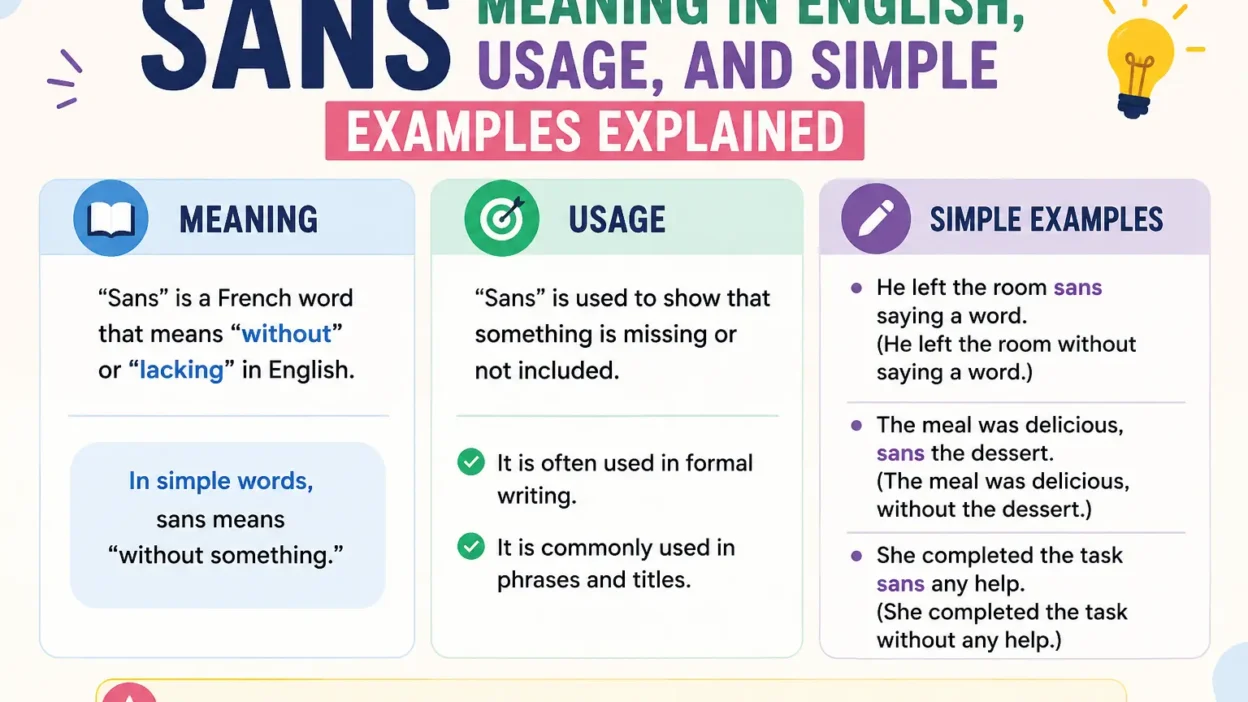
You may have seen the word sans in a sentence and wondered what it means. Sans meaning is simple: sans means “without” or “lacking.” English borrowed the word from French, and today it often appears in formal, literary, humorous, or stylish expressions to show that something is absent.
Understanding sans can help you read and write more confidently because it does not always sound natural in everyday conversation. You might see phrases such as “coffee sans sugar” or references to “sans serif” fonts, where the idea of being “without” something is central. This guide explains how sans works in English and how to use it naturally.
Quick Answer
“Sans meaning” is simply “without.” It is a preposition used to show something is missing or excluded. It is often used in formal, literary, or stylistic writing.
TL;DR
• “Sans” means “without” in English
• It is mostly used in formal or literary writing
• Comes from French language
• Common in phrases like “sans sugar”
• Less common in everyday spoken English
What “Sans” Means in English
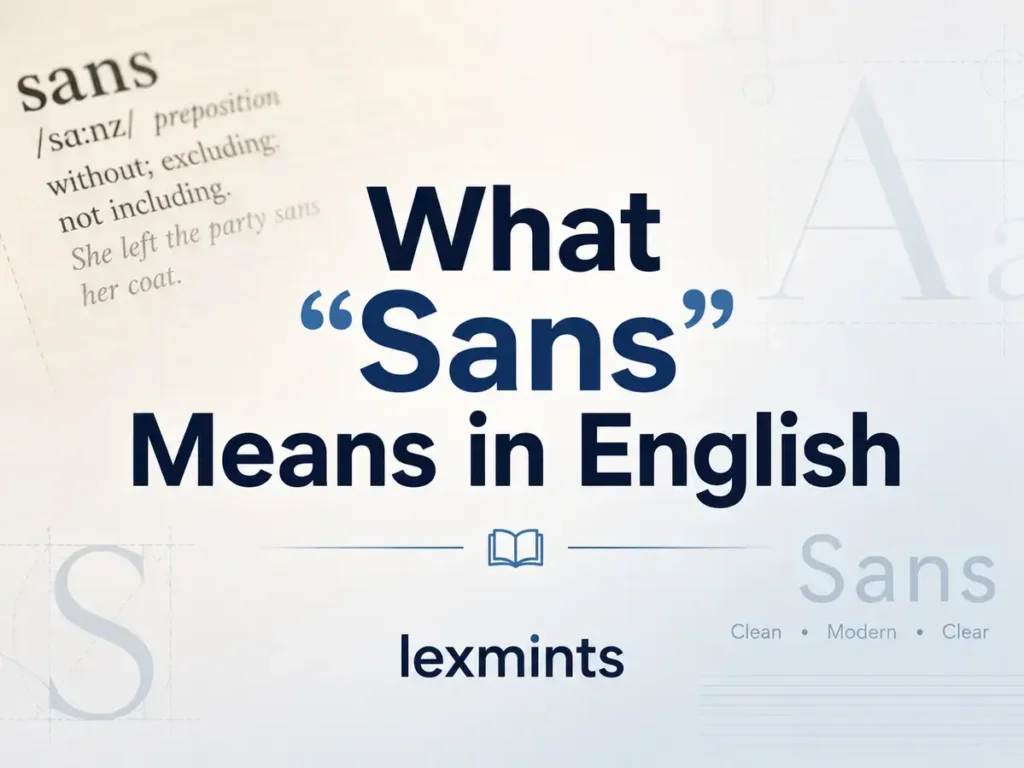
The word “sans” means without something. It shows that something is absent or not included.
For example:
• sans shoes = without shoes
• sans sugar = without sugar
It is simple in meaning but sounds more formal or stylish than “without.”
Part of Speech and Grammar Role

“Sans” is mainly a preposition. It connects words by showing absence.
Example:
• He arrived sans jacket.
It does not change form. It always stays the same word.
Pronunciation of “Sans”
“Sans” is pronounced like:
• /sænz/ (sounds like “sanz”)
Some learners say “sawns,” but that is not correct in standard English.
Everyday Usage of “Sans”
You may see “sans” in menus, writing, or branding.
Examples:
• Coffee sans sugar
• Salad sans dressing
• Vacation sans stress

It gives a slightly formal or stylish tone.
Formal vs Informal Tone
| Context | Best Choice | Why |
| Casual speech | without | natural and common |
| Writing or branding | sans | stylish and formal |
| Academic writing | without | clearer and standard |
The Sans is not wrong in modern English, but it sounds more literary.
“Sans” vs “Without”
“Sans” and “without” mean the same thing, but tone differs.
• “Without” is everyday English
• “Sans” is more formal or decorative
Example:
• Without sugar → normal
• Sans sugar → stylistic or menu wording
Common Examples in Sentences
• She walked in sans shoes.
• The room was decorated sans furniture.
• He ordered coffee sans milk.
• The plan worked, sans complications.
When to Use “Sans”
Use “sans” when:
• You want a formal tone
• Writing menus or branding text
• Creating stylistic or literary expression
When Not to Use “Sans”
Avoid “sans” when:
• Speaking casually
• Writing school essays (prefer “without”)
• You want very clear, simple English
Common Mistakes
Mistake:
• He came sans of his bag.
Correct:
• He came sans his bag.
“Sans” does not need “of.” It already means “without.”
Source Article URL Source Topic Target Article URL Target Topic Anchor Text Anchor Type Internal Link Sentence With HTML Placement Section Relevance Score /100 Priority Cannibalization Risk Notes
https://lexmints.com/sans-meaning/ Sans meaning, usage, grammar, and tone https://lexmints.com/context-meaning/ Context meaning and how surrounding information affects interpretation context surrounding the word Contextual partial-match anchor Because “sans” can sound more formal or literary than “without,” its intended tone is often easier to understand by considering the context surrounding the word. Formal vs Informal Tone — place immediately after the sentence “Sans is not wrong in modern English, but it sounds more literary.” 92 High No The pages cover separate search intents. The connection is strong because the target article helps readers understand how context influences the meaning and tone of “sans.” This contextual body link is more valuable than relying only on the existing previous/next article navigation.
FAQs
What does sans mean in English?
It means “without.” It shows something is missing or not included.
Is sans still used today?
Yes, but mostly in formal, literary, or stylistic writing.
Is sans slang?
No, it is not slang. It is a formal loanword from French.
Can I use sans in essays?
It is better to use “without” in academic writing for clarity.
What is a synonym for sans?
The closest synonym is “without.”
Is sans correct English?
Yes, it is correct but less common in everyday speech.
Conclusion
The word “sans” is a simple way to say “without” in English. It is mostly used in formal or stylistic writing, not daily conversation.